Today once meatless: what vegetarians actually eat and what are some subsitutes for meat
If you think about what distinguishes our society today from the life before or shortly after the world wars, a big change is certainly the frequency with which meat ends up on people's plates. Whereas people used to eat meat only once a week in the past, most people now include ham, sausage, fillet or other processed form of meat in their meals almost every day. The figures of the per person consumption of meat are frightening here nevertheless: e.g. in Spain - according to data from 2003 - 121 kg meat was consumed per person. Closely followed by America with 120.2 kg per capita and per year. Germany is with 88,1 kg in the top 30.
Exactly these numbers are decisive for some to deal with the topic meat consumption and especially production. Several camps have formed in society as a result of this debate:
- Meat consumers who do not care about anything
- Meat consumers who are interested in how the meat is produced, but for various reasons cannot pay attention to it when buying
- Meat consumers who only consume products from sustainable and animal-friendly (if one may say so) production
- Vegetarian on principle
- Vegetarians for other reasons
- Vegan on principle
- Vegans for other reasons
However, one must honestly say that the first vegetarians lived before Christ, so this is not to be considered a "fashion movement". However, this article is not intended to be a political discussion. The first words only served as an introduction and as an aid for later thoughts and ideas. Today it should be about vegetarians. Primarily about what they want and can eat.
What society thinks vegetarians eat
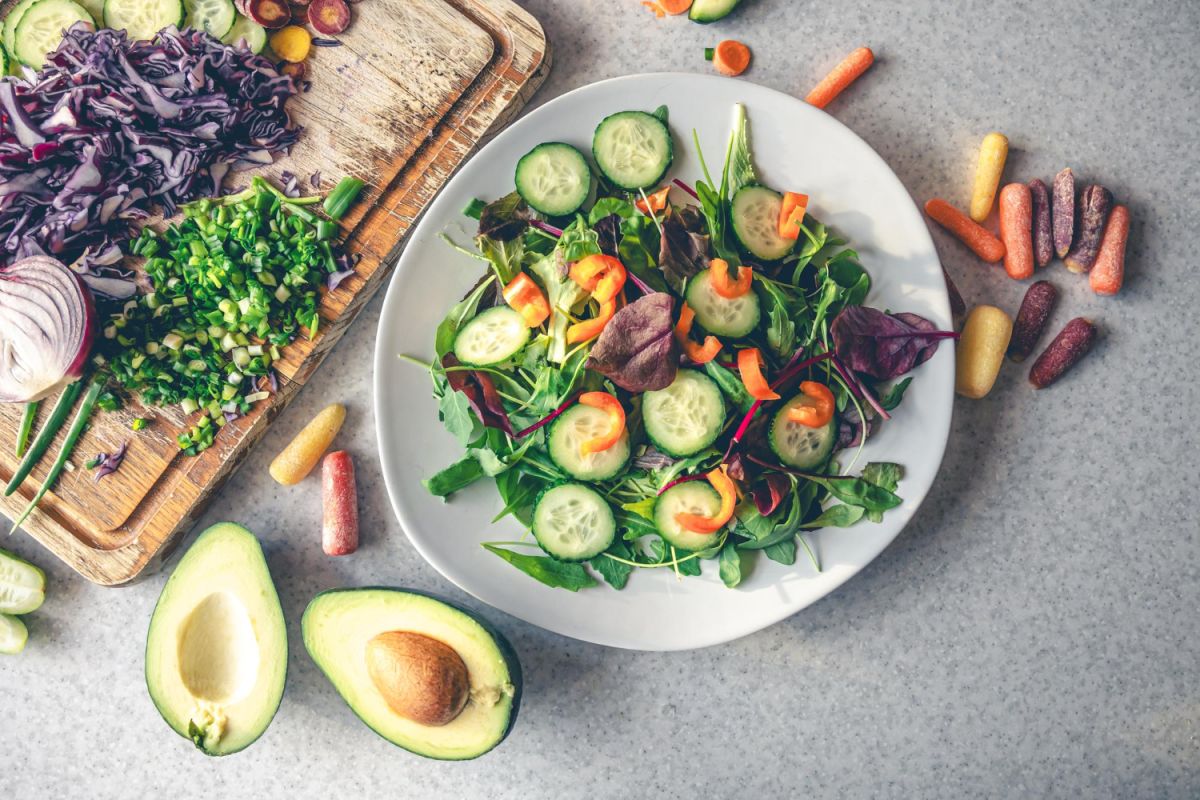
If you want to go out to eat with a vegetarian, most people only think that a garden salad should also be on the menu. Because for many people the main food - for whatever reason - for vegetarians is the salad; whether with or without colorful vegetables.

Most people think that vegetarians live exclusively on vegetables and do not even consider what fantastic alternatives there are. More on this later.
Many thinks straight when Burger eat only of the fact that the poor vegetarian can eat then probably only the Pommes and a salad. Some restaurants also offer a vegetable patty as a vegetarian alternative, but no real alternatives.
What vegetarians actually eat
As we were just talking about a burger restaurant: Here you can start some other variations directly besides the vegetable variation. Be it the Halloumi burger with crispy grilled Halloumi cheese between the burger rolls or be it the patty made from a quinoa legume and cheese mixture. There is definitely more to get here than just the pure pea-carrot patty, which you can also get in the supermarket from the freezer.
Beside the alternative patties for the beloved burgers there are of course a lot more. In the pasta sector, for example, there are already the next representatives where my mouth is watering. Whether with tomatoes, pine nuts and cheese or with avocado and garlic, whether with mushrooms, spinach or just Aglio e olio. Here vegetarians have more than just one alternative to choose from - as long as the restaurants also offer it. By the way, the same applies to pizza and casseroles.
There are also endless alternatives for side dishes, antipasti and other main courses than pizza, pasta and burgers. Sometimes you can simply leave the meat or fish aside - often this does not change the good taste.
Industrially produced meat substitute
However, if you don't want to do without meat, but don't want to see a dead animal on your plate, the food market has considered a wide variety of alternatives. Whether tofu, wheat protein or mushrooms, meanwhile the meat substitute can be found on the supermarket shelves in every conceivable form from almost every imaginable initial product - except for animals.

So, every vegetarian can also eat the Cordon Bleu as long as it contains meat-free ham. Or the potato soup with the meat-free Viennese or the barbecue evening with the meat-free grilled sausages. Here again, everyone gets their money's worth.
Isn't something missing then?
Whoever eats exclusively vegetarian food, renounces dead animals, depending on their characteristics. But straight animal meat and fish products contain important vitamins and nutrients for the body such as Vitamin B12, iron, zinc, protein and iodine. Who does not adapt thus its remaining nutrition to it and spare products in the form of a suitable supplier (vegetable, leguminous plants, etc.) or with food auxiliary means, which will have to fight sooner or later with the consequences of a lack.
So, in case of a change of diet not only the dead animal products should be deleted, but an adequate substitute should be included.