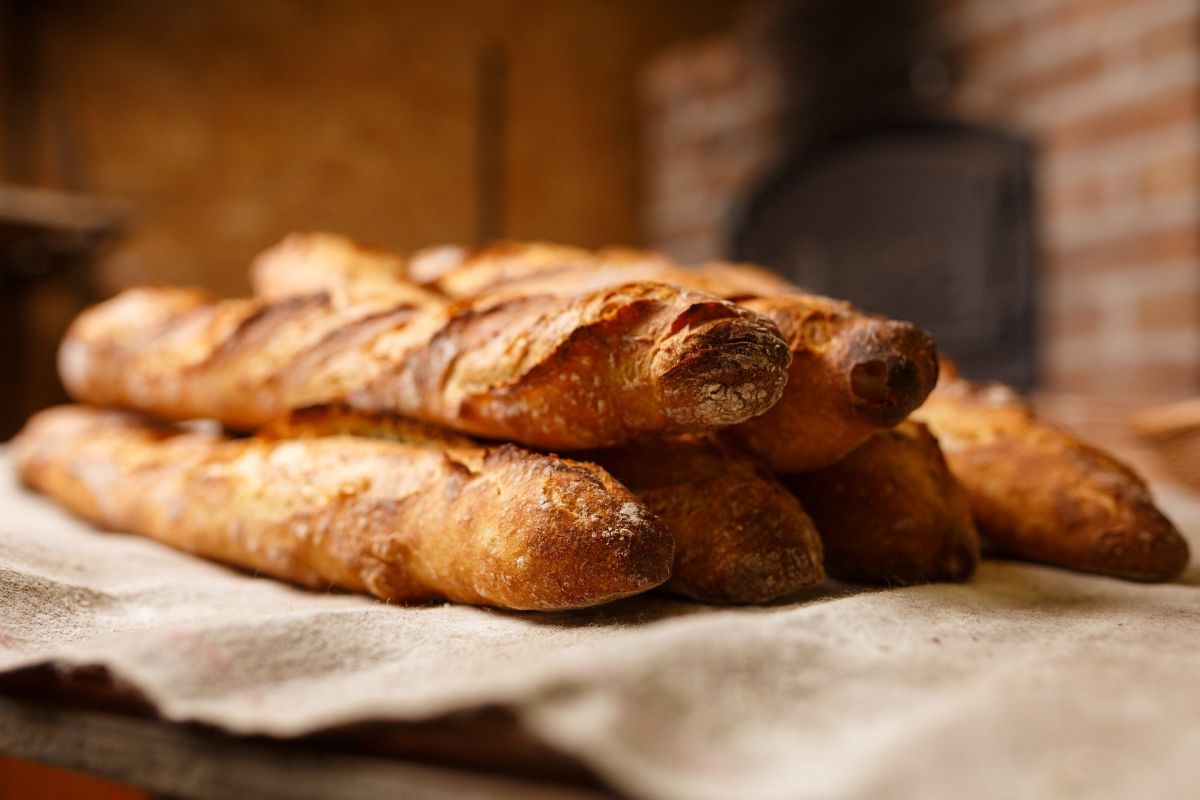
The best baguette in the world - that's what we love it for and that's how it tastes the most delicious!
Let's be honest: Germany really has one thing going for it. That's baking bread. Nevertheless, sometimes one has enough of the main whole meal bread and would like to try something else, enjoy or just nibble. There it is obvious that one looks around once with our direct neighbors. There is, for example, the Ciabatta in Italy, but also - and this is our guest of honor today - "La Baguette" from France.
The French origin of the bread cannot be denied in German usage either. If it is not called "baguette," then names such as "white bread stick" (probably the most imaginative), "Parisian white bread," "Pariser" or, in the Swiss region, "Parisette" come into play. However, despite the unambiguous name, there are a few rumors about its origin: whether it's France, Austria or Poland - you'll probably never quite find out.
What is important, however, is that the baguette tastes and crumbles just fine on German plates. The crust is in comparison to the rest of the bread namely astonishingly much - where this makes up, nevertheless, otherwise rather only a small part.
The baguette used to be produced from fermented dough, but today it is mostly a simple sourdough. The ingredients are actually very simple: a little wheat flour, a little water, salt and yeast - that's it.
Variations
Besides the simple enjoyment of the baguette for breakfast, you can of course do a few other things with it. Chronologically (from morning to evening) you could arrange your baguette day more or less like this:
- Breakfast
As just mentioned, the baguette can serve as a simple bread or roll substitute. Here comes then the most normal breakfast topping on it. Starting with salami, ham and ending with cheese or cream cheese. The Nutella baguette is also not to be underestimated. - Snack
Mini-Hawaii baguettes or tarte flambée baguettes can be used as a small, hearty snack in between meals, helping you to get through the time until lunch. Here, we simply recreated the pizza version in mini format. This can be served either on a slice of the baguette or on one piece.

In addition to the rather warm snacks, you can of course also have a cold snack. Here, baguette slices with cream cheese or cheese are ideal, garnished with fruit, seeds or vegetables. And with one bite they are in your mouth.
- Lunch
For lunch then a fine Döner kebab baguette or a gyros baguette for all non-vegetarians. For the vegetarians, the baguette Vegetaria or the cheese baguette is a good choice. There is also something for the fish fans: Baguette tuna.
- Dinner
For dinner then as an appetizer or side dish a little bruschetta or garlic baguette. This can actually be seen with any main course.

Baguette is almost like a pizza. You can put anything on it, you can enjoy it cold, warm, baked or just plain. The baguette can also be dipped - in creams, soups or in cheese fondue - due to its somewhat firmer crust. It is precisely this crust that makes it a super good candidate for croutons or a crunchy garnish on a salad.
I wish you a good appetite!
This might also interest you: "What to Eat In Paris"